
If you run a retail operation, you know that predicting customer demand, inventory needs, and market shifts separates thriving businesses from struggling ones.
Retail predictive analysis tools transform historical sales data, customer behavior patterns, and market trends into actionable forecasts that drive better decisions.
These platforms help you anticipate what sells, when it sells, and how much inventory you need before demand hits.
In this article, we’ll explore the tools that turn retail data into a competitive advantage.
TL;DR – Top 7 Predictive Analysis Tools for Retail
Let’s start with a brief overview of the top tools you can choose from:
| Software | Features | Best For |
|---|---|---|
| Zenlytic | AI-powered conversational analytics, Clarity Engine, citations, memories, natural language queries | Retailers moving beyond traditional BI/predictive tools to conversational analytics with explainability and trust |
| SAP Analytics Cloud | BI integration, Smart Predict, enterprise planning, automated ML | Large SAP-invested retailers with complex operations |
| Oracle Retail Demand Forecasting | Size-profile optimization, style-color forecasting, seasonal planning | Enterprise retailers using Oracle ecosystem |
| Tableau with Einstein Discovery | Visual analytics, pattern detection, Salesforce integration | Retailers with Salesforce CRM and visualization needs |
| Microsoft Power BI with Azure ML | Azure integration, AutoML, familiar Microsoft interface | Organizations with Microsoft enterprise agreements |
| IBM Watson Studio | Comprehensive data science, retail accelerators, multi-language support | Enterprise retailers with dedicated data science teams |
| Alteryx | Visual workflows, drag-and-drop modeling, pre-built templates | Business analysts seeking no-code predictive analytics |
We’ll cover each platform in detail in this article.
What is Predictive Analytics in Retail?
Predictive analytics in retail refers to the use of historical data, statistical-based algorithms, and machine learning to forecast future outcomes and trends.
The technology analyzes past sales transactions, seasonal patterns, customer purchasing behavior, and external factors such as weather or economic indicators to predict what happens next.
Rather than simply reporting what happened last quarter, predictive analytics shows what’s likely to happen next quarter.
You can use the technology to transform reactive decision-making into a proactive strategy, allowing you to capture opportunities before competitors notice them.
Here’s what you can do with these capabilities:
- You can forecast which products will sell out during holiday seasons and identify customers at risk of defecting to competitors.
- You can also optimize pricing strategies based on demand elasticity and predict inventory needs across multiple store locations.
Insights like these reduce waste, improve customer satisfaction, and accelerate profitable growth across your retail operations.
Benefits of Using Predictive Analytics Software in Retail Stores
Traditional predictive tools promise forecasts, while analytics agents deliver conversational analytics.
Here’s what changes when you upgrade from predictions to actual insights:
- Reduced Operational Costs: Predictive maintenance helps prevent equipment failures, match staffing to traffic patterns, and expose inefficiencies in the supply chain.
- Better Customer Experience: Analytics identify purchasing patterns that are unique to certain customer segments. This enables the personalized recommendations and tailored marketing that drive higher conversions and build loyalty.
- Better Inventory Management: Predictive models forecast demand with accuracy, which helps reduce overstock and stockouts. You can maintain optimal levels that free up capital while ensuring popular items remain available.
- Proactive Pricing Systems: Real-time analytics adjust prices based on changes in demand, competitor actions, and inventory levels. You can maximize margins during peak periods while clearing slow-moving goods.
- Improved Marketing ROI: Analytics tools predict campaign performance and forecast customer lifetime value, helping you allocate budgets to channels that drive actual revenue.
As lawrebx notes in a Reddit conversation on using analytics in retail, these are just a few of the benefits:
“Just scratching the surface: Good analytics allow for optimization of existing processes (supply, pricing, marketing, etc), discovery of systemic problems, risk mitigation in new ventures, new market estimation, macro trend anticipation, and provide the basis for scalable process development and monitoring.”
Criteria Used to Evaluate the Best Predictive Analytics Tools
Selecting retail predictive analysis tools requires evaluating various practical factors to determine whether platforms deliver results.
Here are the features that matter most in an analytics platform:
- Ease of Use: Platforms that make analytics accessible to merchandisers without SQL knowledge accelerate adoption. You can look for a tool with a conversational natural language interface and pre-built retail models, which reduce learning curves.
- Industry Features: Look for a platform with retail-specific capabilities such as seasonality analysis and promotional lift measurement.
- Trust: Each forecast must be reliable because you’ll be betting inventory purchases on predictions. A tool that explains its results earns trust faster than black-box solutions.
- Integration Capabilities: You’ll want a tool that connects seamlessly to POS systems and e-commerce platforms to ensure data flows automatically without manual exports.
When shopping around for a tool, ensure you ask for free trials or live demos. You can even try out one or two use cases across different tools before you decide.
Revolutionary-Ant921 gives this practical approach weight in a Reddit discussion on evaluation criteria when selecting BI/analytics tools:
“When I had to do some assessments comparing analytical tools, I always replicated a dashboard on those tools and then, evaluate how that dashboard performed with different things like: queries, unions, relationships between tables, metrics creation, different charts, how easy is to format those charts etc… It’s always useful to replicate the same dashboard on different analytical tools because you can face same problems on both and you can compare and actually that comparison would solve your doubts. Good luck!”
Best Predictive Analytics Tools for the Retail Industry
Let’s discuss each platform in greater detail below:
1. Zenlytic
Traditional BI dashboards answer predefined questions, but retail operations generate complex inquiries that require flexible analytics platforms.
Zenlytic delivers an AI-powered analytics platform built around Zoë, a conversational data analyst that understands retail queries in natural language.
You can ask Zoë, “What’s driving our return spike in online apparel?” and receive accurate answers backed by sophisticated SQL.
The proprietary Clarity Engine allows Zoë to handle unexpected questions beyond pre-built dashboards while maintaining consistency.
The engine creates dynamic measures when needed, then explains calculations so you understand each result.
Here’s a testimonial on Zoë’s explainability based on real usage:
“Zoë doesn’t just give answers, it walks you through the logic. It caught a gap between our forecasts and actual demand that could’ve cost us $15K a month, and helped us fix it before we went out of stock.”
— Director of Analytics, $1B+ Retail Company
Check out how Zenlytic builds confidence and trust in analytics:
- Trust Through Transparency: Citations trace every answer to source tables and transformation logic, eliminating black-box concerns. Your retail teams can verify calculations and audit data lineage, which builds trust in the results.
- Consistency at Scale: Memories ensure Zoë learns from interactions and maintains consistent definitions across your organization. Merchandising and inventory teams receive identical methodologies when they ask about the “top-performing SKUs.”
- In-Built Data Governance: Zoë’s role-based controls ensure regional retail managers see only authorized data, while your executives view company-wide insights.
- Retail-Ready Integration: Zenlytic connects to cloud data warehouses such as BigQuery and Databricks, where your retail data lives. The platform understands retail business aspects such as basket analysis, cohort retention, and promotional effectiveness.
Zenlytic solves real business problems for various retail businesses.
KOIO, a luxury leather sneaker brand, struggled with manual data processes that required them to repeatedly download, re-upload, and filter sales data for each update.
The startup needed a reliable source of truth to track product performance across styles, sizes, and gender categories without waiting days for reports.
Zenlytic transformed KOIO’s operations by providing instant access to accurate, up-to-date sales data with a single click, which eliminated the need to build manual dashboards.
The change also helped the brand make faster marketing decisions based on real-time product trends.
Retail teams needing sophisticated analytics like these without waiting weeks for custom reports use Zenlytic to accelerate decision velocity.
2. SAP Analytics Cloud
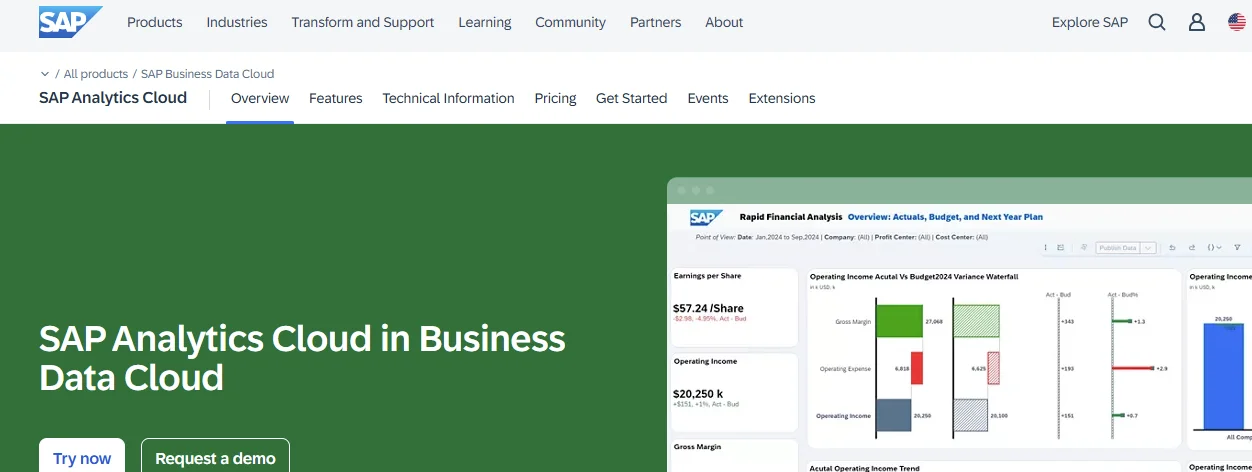
SAP Analytics Cloud combines BI, planning, and predictive analytics for enterprise retail operations.
Its native connections to SAP retail systems streamline implementation for existing SAP customers, while Smart Predict features use automated machine learning for forecast model building.
Organizations using other technology stacks face substantial integration complexity and longer implementation timelines.
3. Oracle Retail Demand Forecasting
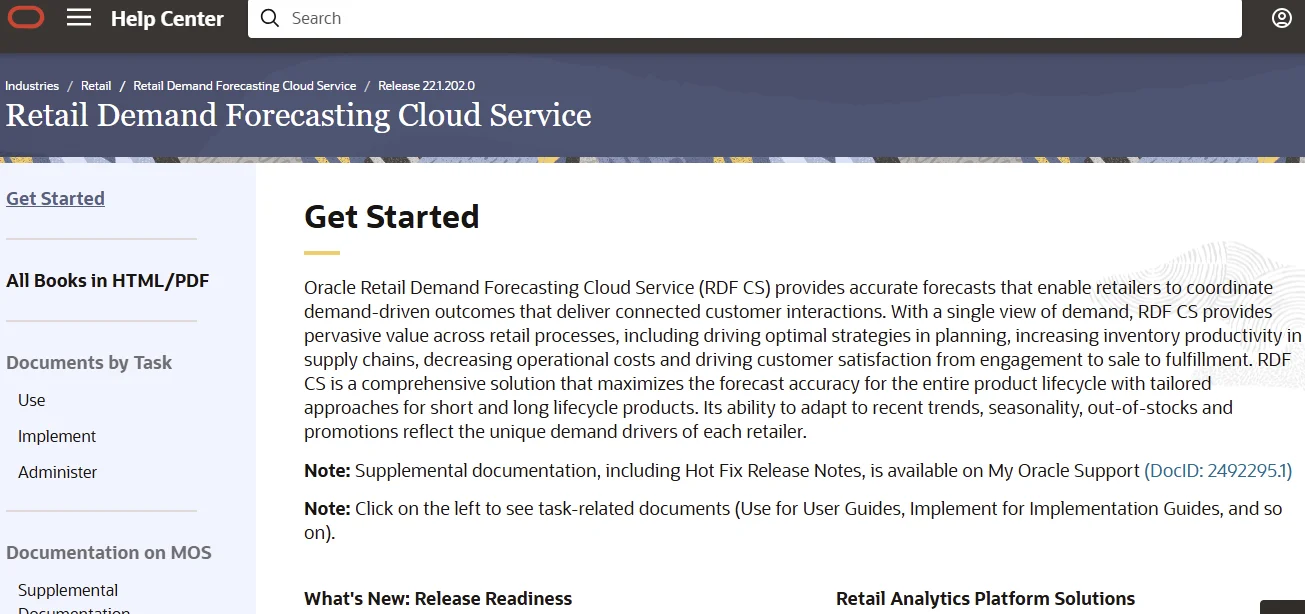
Oracle’s retail-specific solution offers size-profile optimization, style-color forecasting, and seasonal assortment planning.
Machine learning algorithms generate demand forecasts across complex product hierarchies.
The tool has two main downsides:
Implementation requires significant effort and ongoing technical maintenance.
The pricing structure typically targets enterprise retailers with substantial budgets rather than growing operations.
4. Tableau with Einstein Discovery
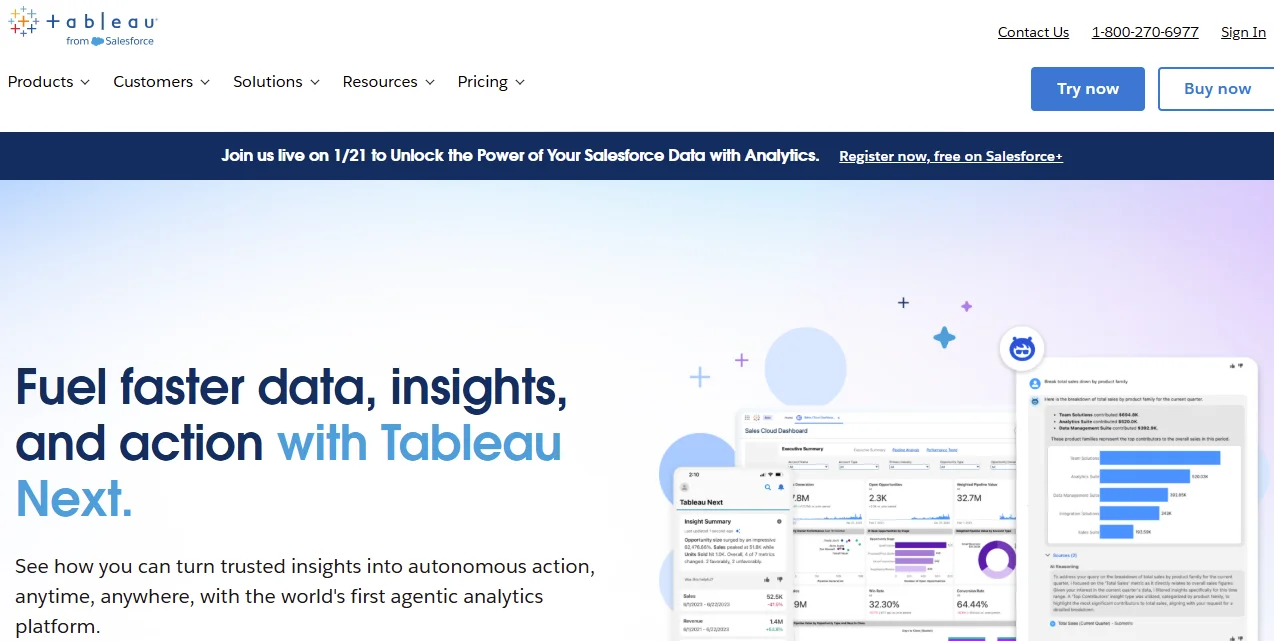
Tableau visualizations combine with Salesforce Einstein Discovery for augmented analytics to surface patterns and predict outcomes.
The platform automatically analyzes datasets and suggests predictive models.
However, building sophisticated predictive models beyond basic forecasting often requires technical expertise that many retail teams lack.
The platform’s AI capabilities work best for straightforward use cases.
5. Microsoft Power BI with Azure ML
Power BI extends into predictive analytics through Azure Machine Learning integration.
Microsoft-familiar retail teams leverage pre-built AI models or build custom predictions using AutoML capabilities.
Achieving sophisticated predictive capabilities requires substantial technical configuration and data science knowledge.
If your retail teams don’t have dedicated resources, they struggle to move beyond basic reporting.
6. IBM Watson Studio
Watson Studio provides comprehensive data science capabilities from preparation to deployment. Retail-specific accelerators include demand forecasting, churn prediction, and assortment optimization templates.
The platform’s complexity exceeds what most retail operations need for practical decision-making. Smaller organizations find its learning curve steep and the resource requirements prohibitive.
7. Alteryx
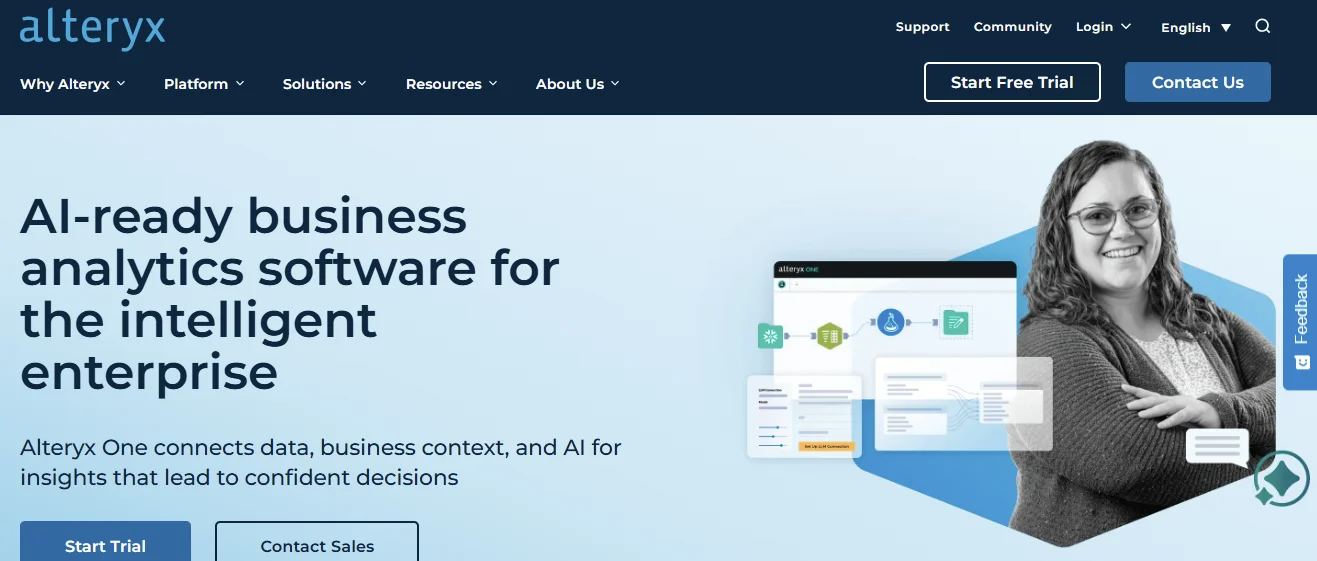
Alteryx democratizes predictive analytics through visual workflow design, eliminating coding requirements.
Retail analysts drag and drop tools for data cleaning, forecast modeling, and report automation.
The disadvantage is that user-based licensing becomes expensive as usage scales across retail organizations. Teams still need significant training to build effective workflows, and complex scenarios often require technical expertise.
How to Choose the Right Tool for Your Retail Business
Matching analytics platforms to retail operations requires an honest assessment of a tool’s current capabilities and your future needs.
Consider the following during the evaluation:
- Assess Technical Resources: Platforms like Watson Studio suit teams with data science expertise, while Zenlytic empowers business users without coding skills. Ensure you match platform complexity to the available talent.
Zenlytic has made a name for itself for giving business users access to analytics without technical expertise:
“We needed a solution that let senior business leaders ask complex, data-driven questions without requiring SQL knowledge or report-building skills. After evaluating several GenAI tools, only Zenlytic fully harnessed AI to deliver meaningful, business-ready insights.”
— Josh Horton, Director of Data, Analytics & AI, Cox 2M
- Evaluate Existing Infrastructure: Tools that integrate natively with your current data warehouse and POS system reduce friction during the implementation. You can use cloud-based solutions, which are better at connecting to data.
- Prioritize Trust Features: Retail decisions carry financial consequences, so look for a platform that provides explainability and prioritizes the importance of consistency more than intelligence in data analytics.
- Consider Scaling Dynamics: A growing retailer needs a platform capable of handling increasing data volumes without compromising performance. You should test each tool’s scalability claims with real data during the evaluation period.
- Calculate the Total Cost: Look beyond subscription fees to implementation costs, training requirements, and ongoing maintenance to ensure you stay within your budget.
Challenges When Implementing Predictive Analytics in Retail
Predictive analytics delivers tremendous value, but many implementation obstacles often trip up unprepared retailers.
You must be wary of frequent issues such as:
- Resistance to Change: Staff members accustomed to spreadsheets often resist new analytics approaches. Successful implementations require training, clear communication, and quick wins to build the confidence of your team members.
- Relying Too Much on Technology: Although analytics platforms provide insights, you must maintain human input for interpreting results within the business context.
- Integration Problems: You need technical expertise and time to connect disparate sources since retail data lives across POS systems, e-commerce platforms, inventory management systems, and loyalty programs.
- Data Quality Problems: If you use your preferred tool with incomplete or inaccurate data, you only produce unreliable forecasts. You must clean historical data, standardize formats, and establish governance to ensure ongoing quality.

Frequently Asked Questions (FAQs)
Let’s check out answers to common questions retail leaders ask when considering predictive analytics tools:
Can Predictive Analytics Platforms Work Without Historical Data?
Yes. Each platform must have historical data for accurate predictions, though the amount varies depending on the use case.
Demand forecasting requires at least one year of capturing seasonal patterns, while churn models benefit from multiple years.
Retailers that lack sufficient history supplement internal data with industry benchmarks and external datasets until they accumulate enough transaction records.
How Long Does It Take to See Results from Predictive Analytics?
The timeline for good ROI depends on implementation complexity and the scope of use cases. Simple forecasting models deliver insights within weeks once you establish data connections, while sophisticated predictions take months.
You can count on quick wins, like inventory optimization, to demonstrate value quickly and build momentum for broader analytics initiatives.
Are Cloud-Based Predictive Analytics Tools Better for Retail Stores?
Yes. Cloud platforms offer significant advantages such as faster deployment, automatic updates, easier scalability, and lower infrastructure costs.
They connect to modern data warehouses where retail data increasingly lives, reducing integration complexity.
What KPIs Should Retailers Track Using Predictive Analytics?
As a retailer, you can focus on the metrics that directly impact profitability. These can include demand forecast accuracy, inventory turnover rates, gross margin by category, customer acquisition cost, lifetime value, churn rate, and promotional lift.
Start with high-impact KPIs where improved forecasting drives measurable revenue gains, and make changes as you go.
Conclusion
You can use a retail predictive analysis tool to transform how your business forecasts demand, manages inventory, and understands customers.
However, the difference between thriving retailers and struggling ones comes down to prediction speed. While competitors wait days for analyst reports on what happened last quarter, Zenlytic users ask ‘what will happen next month?’ and get accurate, explainable forecasts in seconds.
The Clarity Engine delivers SQL’s power without technical expertise, while Citations and Memories ensure every insight is trustworthy and consistent.
Ready to see how conversational analytics accelerates your retail operations?