

Ever experienced your team spending days waiting for a simple report?
If you’re a business leader looking for faster, smarter ways to make decisions, you’ve probably hit this wall. Most companies sit on mountains of data but struggle to use it effectively.
What matters is how enterprise data analytics can improve business decision-making in ways that actually move your business forward.
Analytics agents are changing this equation.
What Makes Enterprise Data Analytics Different from Legacy Business Analytics
Legacy BI tools were built for a different era.
They work on a simple premise: you ask a question, wait for an analyst to build a report, and eventually get your answer.
By then, the business context has often shifted.
Traditional dashboards can only answer questions you already thought to ask. If your sales dashboard shows revenue by region, that’s what you get.
Want to know why the northeast region dropped 15% last quarter? You’ll need to file another request, wait another few days, and hope the analyst has bandwidth.
Enterprise analytics agents work differently from old-school BI in that:
- They understand natural language questions
- They can answer follow-up questions without building new reports
- They proactively alert you when something important changes
- They can trigger actions automatically (like generating purchase orders when inventory drops)
There is also an architectural difference.
Legacy BI sits on databases and shows historical data. Modern agents connect to semantic layers that understand your business logic, use AI to reason through complex questions, and integrate with your workflows.
When your top customer’s order pattern changes, an analytics agent doesn’t just show you a chart. It explains the pattern, compares it to similar customers, and suggests retention actions.
The limitations of traditional BI mirror what happened to Blackberry when smartphones arrived.
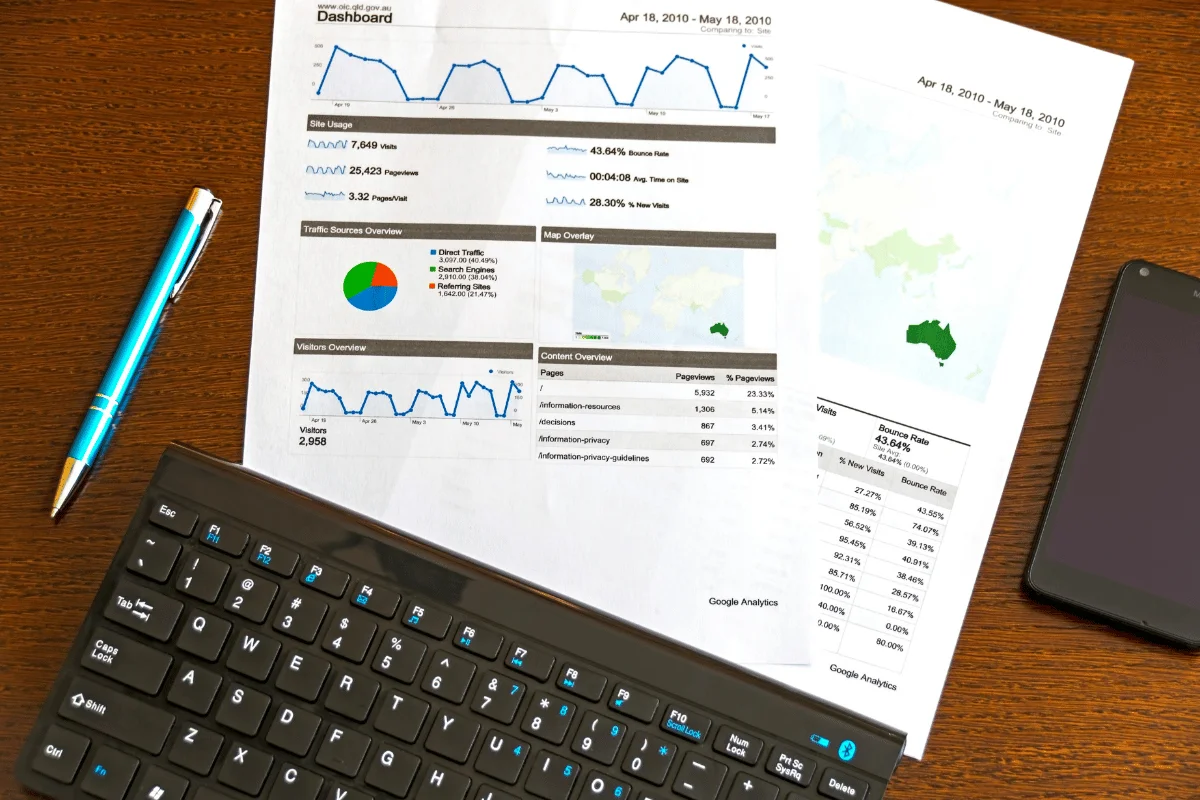
How Data Improves Business Decisions Across Enterprise Functions
Business leaders love to talk about trusting their gut. We’ve all heard the stories – Steve Jobs following his intuition to create the iPhone, or successful investors making bold bets based on instinct.
These stories make intuition sound like a superpower. But that’s a problem in business, where one wrong call can cost millions. Data becomes a saviour here. It makes your intuitions better.
Your gut might tell you something’s off with your sales numbers or that customers want a new feature. Data tells you if you’re right. It shows you the patterns you can’t see and catches the mistakes you’d miss.
In fact, a PwC survey of more than 1,000 senior executives found that “highly data-driven organizations are three times more likely to see major improvements in their decisions.”
Here’s how data transforms decision-making across your entire organization:
- Finance Gets Real-Time Control: Your accounting team can track cash flow, forecast budgets, and spot problems before they grow. Data shows exactly where money goes and helps you plan spending smarter.
- Product Managers Build What Users Want: Feature adoption data shows which capabilities users actually engage with versus those that sit unused. You can predict churn by spotting early warning signs when users stop engaging and understanding how different customer types use your product differently.
- Sales Teams Close More Deals: Sales data reveals which leads are most likely to buy and what messaging works best. Your team stops guessing and starts focusing on opportunities that actually convert.
- HR Builds Better Teams: People analytics help you understand why employees stay or leave. You can spot top performers early, plan better training programs, and reduce turnover costs.
- Supply Chain Stays Flexible: Real-time data lets you see inventory levels, track shipments, and adjust to demand changes quickly. When disruptions happen, you respond faster because you see problems coming.
- Marketing Reaches the Right People: Customer data shows what your audience actually wants instead of what you think they want. You spend less on campaigns that don’t work and more on strategies that bring results.
- IT Protects Your Business: Data monitoring catches security threats early and shows where systems slow down. Your IT team fixes problems before users complain and keeps operations running smoothly.

Why Enterprise Decision-Making is Moving Toward Analytics Agents
Business leaders are tired of waiting days for answers that should take seconds.
Traditional BI tools promised self-service analytics, but the reality fell short. Only 30% of employees can actually use these platforms, leaving most teams stuck in “Excel hell” or waiting at the back of the data team’s queue.
That’s why the market is moving towards conversations as the default interface for analytics.
The AI in data analytics market is exploding from $31.22 billion in 2025 to a projected $310.97 billion by 2034.
Analytics agents are powering this growth. Unlike legacy BI dashboards that only show what happened last week, they answer the deeper questions that actually move your business forward.
They:
- Explains reasoning,
- Cite sources, and
- Adapts to how your team naturally talks about data.
Companies have tried the “AI on top of BI” approach with tools like Power BI Copilot and realized it doesn’t work. These black-box solutions can’t be trusted for real decisions.
What businesses need is a white-box analytics agent that combines accuracy, consistency, and explainability.
Early adopters understand that you can’t become AI-ready by waiting for the perfect data transformation project. You become AI-ready by actually using AI.
Gartner predicts that by 2027, “50% of business decisions will be augmented or automated by AI agents.” The transition is already underway.
Get Trusted Answers from Your Data in Seconds with Zoë
Zenlytic’s AI data analyst, Zoë, eliminates the gap between your data and your decisions.
She doesn’t just query your data warehouse. She guides you through complex business questions, explains every calculation, and applies the same governance your data team relies on.
No SQL knowledge required. No more waiting on analysts.
See how Zoë answers your toughest business questions and experience analytics agents in action.
Leading brands like Stanley Black & Decker and J.Crew trust Zoë to handle the high-impact questions traditional platforms can’t answer.

Core Elements of a Strong Enterprise Analytics Agent Strategy
Four components need to work together for analytics agents to succeed:
1. Compatible Data Infrastructure
You need a cloud data warehouse that can handle enterprise scale:
- Snowflake: Multi-cloud flexibility with evolving AI capabilities
- Databricks: Best for comprehensive AI and ML workloads
- BigQuery: Serverless architecture for petabyte-scale analytics
- Amazon Redshift: Optimized for AWS-native environments
Look for federated query capabilities, native ETL connectors, and support for both batch and real-time processing.
2. Semantic Layer Foundation
This is your business logic layer. It prevents AI hallucinations by grounding analysis in correct definitions.
Think of it as a translation layer. It knows that “customer” in your CRM equals “client” in your billing system. It understands how discounts and returns impact adjusted revenue.
The good thing is that you don’t need to build this perfectly upfront. Modern analytics agents learn your business definitions as you use them, automatically creating and refining the semantic layer through real questions.
Gartner predicts that by 2028, most GenAI business applications will be built on existing data management platforms, reducing complexity and delivery time by 50%.
3. Comprehensive Data Governance
Poor data quality is draining your resources right now.
Bad data costs the U.S. economy $3.1 trillion (yes, trillions!) annually, and your team is paying the price.
Knowledge workers waste half their time hunting for the correct data and fixing errors. Your data scientists spend 60% of their time cleaning data instead of analyzing it.
What you need:
- Clear data ownership by department and domain
- Automated validation and cleansing tools
- Quality metrics and SLAs that teams track
- Dedicated data stewardship roles with accountability
4. Explainability Infrastructure
Executives don’t trust their analytics because the hidden trap of AI analytics platforms is the lack of explainability. You can’t act on insights you don’t trust.
Building trust requires:
- Transparent query explainability showing SQL and data sources
- Complete audit trails of agent decisions
- Confidence levels indicating certainty of AI insights
- Human-in-the-loop approval for critical decisions
These components work together. Your warehouse holds the data. Your semantic layer defines what it means. Governance ensures accuracy. And explainability is what makes AI analytics trustworthy.

How to Implement Enterprise Analytics Agents for Better Decisions
Moving from legacy BI tools to analytics agents doesn’t require a massive data transformation project. The key is starting with AI while building trust and governance along the way.
Here’s how leading enterprises are successfully implementing analytics agents:
- Start with Your Existing Data Warehouse: Connect your current data infrastructure directly to your analytics agent. You don’t need to wait for complete data transformation. Analytics agents work with what you have and improve as you use them.
- Define Core Business Metrics First: Identify the key metrics your teams ask about most – revenue, customer churn, conversion rates, or product usage. Let your analytics agent learn these definitions as business users ask questions, creating an automated semantic layer that evolves with real usage patterns instead of theoretical planning.
- Prioritize Explainability Over Speed: Choose an analytics agent that shows its work, not just its answers. Every calculation should cite full data lineage, so your team understands where numbers come from. Citations that show data sources build trust faster than black-box AI that gives mysterious results.
- Empower Business Users: Give product managers, marketers, and operations teams direct access to ask questions in natural language. The goal is freeing your data team from ad hoc requests so they can focus on strategic projects, not answering the same questions repeatedly.
- Apply Governance from Day One: Ensure your analytics agent respects the same data access permissions and security rules as your BI tools. Users should only see data they’re authorized to access, maintaining compliance while enabling self-service exploration.
One key lesson from enterprises adopting AI agents is the importance of traceability in decision-making.
As explained in a Reddit discussion, “Make sure that every decision text have a reasoning text that goes together with it, so every item can be traced back to its roots. If there is a wrong decision, it can be traced back to where in the pipeline the problem was introduced.”
This transparency is what separates trusted analytics agents from black-box systems that business users won’t adopt.

Common Challenges in Implementing Enterprise Data Analytics
These problems trip up most companies:
- Resistance from Existing BI Tool Investments: Companies have spent millions on Tableau, Power BI, or Looker licenses and training. Leadership hesitates to adopt new analytics platforms because it feels like abandoning sunk costs, even when current tools aren’t delivering results.
- Undefined Metrics Ownership: No one agrees on who owns critical business definitions. Marketing measures “conversions” differently than sales measures “qualified leads,” creating endless debates that stall analytics projects before they start.
- Legacy System Dependencies: Your analytics need data from mainframe systems built decades ago. These systems lack APIs, use outdated data formats, and require specialized knowledge that only a few employees still possess.
- Employee Fear and Resistance: When companies introduce AI-driven analytics agents, employees worry about job security and loss of control. Research shows 52% of employees loathe AI, and 31% actively sabotage AI adoption efforts. Without addressing these fears, implementation efforts fail regardless of the technology’s capabilities.
- Scalability Bottlenecks During Peak Usage: Your analytics platform works fine until everyone logs in on Monday morning for weekly reviews. Query performance crashes when hundreds of users hit the system simultaneously, forcing teams back to manual workarounds.

Frequently Asked Questions (FAQs)
How Do Organizations Choose the Right Data Analytics Tool?
Organizations evaluate analytics tools based on ease of use, visualization quality, data connectivity, and security.
For analytics agents specifically, look for strong natural language capabilities, explainability features that show reasoning, and a semantic layer with proper safeguards, since not all are equally secure.
What Industries Benefit Most from Enterprise Data Analytics?
Retail, technology/SaaS, and manufacturing see the biggest returns from enterprise analytics.
Industries with complex operations, large customer bases, or tight profit margins gain the most value from faster, data-driven decisions.
How Do Enterprises Evaluate the ROI of Data Analytics Investments?
Enterprises measure analytics ROI by tracking time saved on data requests and speed of decision-making.
If your team goes from waiting three days for analyst reports to getting answers in three seconds, that’s measurable ROI in employee productivity and faster business decisions.
Conclusion
The shift from dashboards to analytics agents fundamentally changes who can make data-driven decisions in your organization.
Right now, your data team drowns in ad hoc requests. Business users wait three days for answers they need in three seconds. And 70% of your data questions never get asked because people don’t want to bother anyone.
Zenlytic’s Clarity Engine solves this by combining SQL’s flexibility with a semantic layer’s trust. Zoë remembers your business definitions through Memories, so “Latin America sales” means the same thing every time anyone asks. She shows her work through Citations, so you can verify where every number comes from.
Your team gets the freedom to explore. Your data team gets 50% of their day back.
Schedule a demo and see how fast decisions happen when everyone speaks data.